This novel tells the alternating stories of Vivian in 1964 and Violet in 1914. One morning, Vivian receives a strange parcel in the mail that leads her on a path to finding more about her family’s past and a mysterious aunt named Violet.
Violet is working in 1914 as a female physicist in prewar Germany under the watchful eye of Dr. Grant, whom she ends up marrying. The summer that she meets Lionel Richardson, a captain in the British army, Violet’s life changes forever.
Vivian is working as a journalist in 1964 and begins researching more about Violet’s life for a newspaper article. She learns some family secrets along the way.
I enjoyed this book. I love books about family secrets, and I enjoy the format, the switching between the past and present.
I really enjoyed the fact that this book didn’t fit neatly into a single category. Readers who enjoyed the fantastic, blood-thirsty mermaids in Lies Beneath will likely be enthralled by the different races of the Alphas and their various body types, weapons, and powers. Fans of The Hunger Games are sure to appreciate the various layers of societal resistance, government involvement, and fighting for survival. And, of course, readers who prefer their dystopias with a side of angsty/forbidden love, like in the Delirium series, will not be disappointed!
When the Alpha emerge from the Atlantic and set up camp on the shores of Coney Island, Lyric Walker’s world is turned upside down. Her mother, who came with a smaller “scout” group of Alpha is desperate to find her family but needs to remain hidden — for fear that she will either be punished by the Alpha or taken away by the US government for medical experimentation at a secret internment camp to which most of the other “scout” Alphas were relocated. Lyric knows that she is supposed to keep a low profile so that no one discovers the truth about her mother’s identity, but she somehow ends up being assigned as a peer mentor to the Alpha prince. With the impending threat of harm to her family and the very real possibility of war between the humans and the Alphas, it’s no wonder Lyric’s every move had me on the edge of my seat.
Everything started back when Addie refused to say the Pledge of Allegiance; she was adamant about the fact that there wasn’t “liberty and justice for all” and, on principle, refused to say the pledge anymore. Even though her teacher didn’t quite seem to understand where she was coming from, her friends, the misfits, thought she was on to something. They were tired of being made fun of and mistreated, and they were fairly certain that nothing would improve unless they did something about it — so they decided to go about effecting that change by creating a third party in the student council elections. The book did get a little didactic at times, but I think many tween and teen readers will appreciate Addie’s brand of idealism and the fact that working together actually made a difference in the school. Fortunately, many schools are making an effort to teach character education and to promote an environment free from hatred
and bullying… but it’s still out there. Sadly, I’m all too certain there will always be kids who can relate to this story.
This is one of the most emotional, heartfelt stories I’ve read in a long time because even though it is fictional, the events and people are based on real events that took place in history. The book is set during World War II in Nazi-occupied France. The story focuses on two sisters (Isabelle and Vianne) who had a difficult upbringing and who couldn’t be more different. How they survive the war and navigate through this time period is compelling. The book depicts how women were able to help during the war doing such things as hiding Jewish children and leading allied pilots out of occupied areas to safety. This time period was depicted so realistically, touching on the starvation and sacrifices, holocaust, concentration camps and death, and love that took place during this horrible war. This story will stay with me for a while. It reminds us of the horrors of war.
This quote by the author sums it up perfectly:
“Men tell stories. Women get on with it. For us it was a shadow war. There were no parades for us when it was over, no medals or mentions in history books. We did what we had to during the war, and when it was over, we picked up the pieces and started our lives over.”
― Kristin Hannah, The Nightingale
I read this book because the Upper Hudson Library System has a yearly “tough reads” book discussion during our June Youth Services Advisory Council meeting. We talk about why the book was a tough read, why it’s so important not to censor our collections, and how to get these books into the hands of the tweens and teens who would benefit from reading them. Sadly, I was unable to attend the book discussion this year, so I don’t know what everyone else thought about this book… but I figured I could at least share my thoughts on this blog.
This story is a sports rivalry like no other; the rivals aren’t even from different schools. The members of the football team and the gymnastics team keep pranking one another, and the stakes just seem to get higher and higher every time. It’s pretty clear to the guys on the gymnastics team that the guys on the football team are getting out of control, but they just can’t seem to help themselves. When something completely terrible happens to Ronnie, no one wants to talk about it. Even his own teammates try to get him to pretend it never happened. But life doesn’t work like that. And, sooner or later, someone is going to have to put a stop to this prank war before it claims another victim.
Although I enjoyed the Burn for Burn series, it wasn’t what I would typically expect from Jenny Han. I first fell in love with her writing when I read Shug. I went on to adore the Summer I Turned Pretty series and frequently recommend it to readers who are looking for an author similar to Sarah Dessen. Even though Jenny Han’s stories fall on the lighter side of YA, I can’t help but use words like “honest” and “raw” when I describe her characters. I love the fact that Han’s characters face problems that a majority of tweens and teens can relate to — and the mom/librarian in me especially appreciates her multidimensional female characters.
Lara Jean has fallen in love many times, but that doesn’t exactly mean she has had much dating experience. Instead of dating those boys, though, she skipped straight from falling in love to letting them go. And, in order to let them go, she wrote a love letter of sorts. Whenever she wrote to one of the boys she loved, Lara Jean always wrote honestly and held nothing back (because she knew that the boys would never really read the letters). She’d planned to simply keep all of the letters in the hat box her mom gave her to hold her special and/or secret items. The fact that she chose to include the name and address of each boy on the front of the envelope, nevertheless, proved to be rather unfortunate. After the hat box mysteriously disappeared from her closet and the letters were all “accidentally” mailed out, Lara Jean ended up agreeing to be in a fake relationship to avoid her sister’s ex-boyfriend, Josh — to whom she had written one of the most recent letters . But how is a girl supposed to know whether her fake boyfriend is actually flirting or just putting on a good show? And what should she do if she starts to think she might have feelings for him? The book ended a little too abruptly for my liking, so it’s a good thing there is a sequel — P.S. I Still Love You — that came out at the end of May. 😉
You is a crazy fun read. We have Joe, who is obsessed with Beck. Joe will do anything to be with Beck, even kill.
The book is told in the second person, which took a bit of getting used to, but really worked for telling the story. Joe is absolutely crazy, a stalker in the 21st century, finding out everything about Beck by hacking into her email, reading her twitter feed and her Facebook posts. Beck, the object of Joe’s obsession is a self-centered post-grad living in NYC. It’s hard to say more without spoiling the plot.
I recommend this if you’re looking for a fun read about a crazy guy who will do anything for “love.”
New Year’s Eve in London finds a desperate woman climbing the stairs of a tall building with the intention of throwing herself off. Then, she finds three other people up there with the same intention.
Thus begins this quirky, dark -humored novel by British author Nick Hornby. The four people talk themselves down, go for coffee, then decide to form a support society. Each is completely different from the other – a disgraced TV personality, a punk young woman, a failed (American) rocker, and a middle-aged woman with a terribly disabled child.
It concludes relatively happily, as the four encourage one another to accept and conquer the challenges they each face.
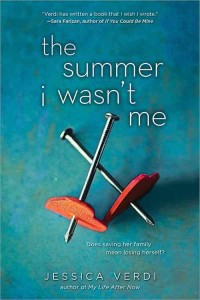
Despite the fact that the American Psychiatric Association put forth a resolution in 2009 stating that “there is insufficient evidence that sexual orientation change efforts work,” there are still numerous facilities and therapists that claim they can “cure” homosexuality. It breaks my heart and makes me angry, in equal measure, when I hear about teens being sent off to so-called conversion therapy camps. To put it plainly, I find the notion that GLBTQ people can/need to be “fixed” is simply horrifying. I recognize that some people’s religious views are the reason they don’t condone homosexuality, but I reject the implication that one’s religious beliefs can or should be forced upon anyone else. Though some some places [California, New Jersey, Oregon, and Washington D.C.] have passed laws banning conversion therapy for minors, I am appalled that so many states haven’t stepped up. Hopefully, books like The Summer I Wasn’t Me and The Miseducation of Cameron Post can help to open people’s eyes and to bring about further change.
Lexi knew that she was a lesbian since she was in elementary school. And she also knew, for just as long, that she would prefer to hide this fact because the rest of her South Carolina community was adamantly against homosexuality. She almost told her father when she visited him on his death bed, but she was terrified that her final memory of him would be of his disapproval and disappointment. After his death, Lexi’s mom fell into a deep depression. Though Lexi did what she could to try and make things easy for her mom, nothing seemed to work. So, one day, when Lexi accidentally left out a journal in which she had drawn pictures of a girl she liked, her mom completely freaked. The only thing that seemed to make her mom happy was the possibility that Lexi could be “cured” at a special camp called New Horizons. And even though Lexi wasn’t sure it would work, she was willing to do whatever it took to make her mom happy again. 🙁
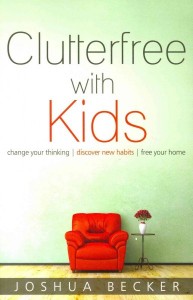
The complete title of this book is actually Clutterfree with Kids: Change your thinking. Discover new habits. Free your home. Since that was such a mouthful, though, I decided to go the extra mile and even de-clutter the title of this post! I have to admit that I didn’t really know what to expect when I checked out this book. As many of you are probably doing right now, I read the title and assumed that it would be a collection of tips and tricks on how to organize your home better so that you can eliminate clutter. I was pleasantly surprised to find that it was less Secrets of an Organized Mom and more Say Goodbye to Survival Mode. Rather than tips and tricks for being better organized, I found inspiration to live more simply. Becker gets to the root of the problem and acknowledges that people who desire a less cluttered home, and who want to spend less of their time cleaning up and organizing their stuff, should work on owning fewer things. While some people take minimalism way too far for my comfort, I thought Becker’s approach was perfectly reasonable. And though I could probably go on and on about different things that resonated with me, I think the perfect summary can be found on Becker’s Becoming Minimalist website — “Never underestimate the importance of abandoning crap you don’t need.”
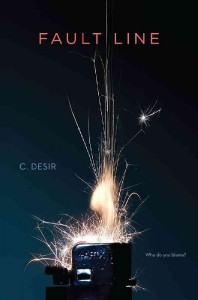
The most obvious audience for this book is people who have been directly affected by sexual assault. I think this book could help both victims and the people close to them with processing their feelings and seeing that they are not alone — especially friends and family members of rape victims, since there aren’t many books about the guilt, shame, and helplessness they often experience. One of the most important audiences for this book, nevertheless, is the general population of adolescents and young adults. Sadly, many people aren’t even sure what constitutes rape. I think reading this book would be an excellent way to broach the subject with adolescents and young adults as a part of a comprehensive sex education program. Fault Line provides an opportunity to explore and discuss the concept of consensual sex vs. rape and also provides some valuable insight into some common reactions of victims of sexual assault. Though some people complain that there are “too many rape books” out there, I disagree. Rape is still a very big problem in our society. Perhaps if Laurie Halse Anderson‘s Speak weren’t so relevant almost 20 years after it was first published, I might think those critics had a leg to stand on.
Ben’s life was bordering on perfect when he and Ani first got together. Not only was he a popular jock whose swimming had him on the fast track to a scholarship, but his family was so well-adjusted as to be freakish. Ani made him happier than he had ever been… and then something happened at a party. Ben didn’t go to the party, so now he blames himself for what happened. But, what did happen? Some people started saying that Ani got drunk and willingly slept with a bunch of guys. The biggest problem, for Ben, is that Ani doesn’t seem to remember much, and she is all too willing to both believe the rumors and to blame herself. Still, her friend Kate, who was at the party, was certain that Ani must have been drugged and that the resulting sexual encounter could not have been consensual. The only complaint I have is that some of the discussions between Ben and Ani’s advocate [from the ER] seemed a bit too clinical and didactic — although it’s entirely possible that conversations such as that would be kept clinical in real life.
There is one thing I would like to clarify before starting my actual review. Some people might start reading the first book of the trilogy and think the “sci-fi/fantasy” classification is unjustified. Even at the end of the first book, I was a little unsure if the supernatural element was quite enough to justify being in the “sci-fi/fantasy” section of the Teen Area. But, trust me when I say that it will make sense if you keep reading.
Although Jar Island is typically thought of as a super-safe, affluent summer destination, much like Martha’s Vineyard, some people know there is a darker side of the island. Lilia, though wealthy and typically good, had a bad experience with some boys over the summer and will now stop at nothing to keep her little sister from being hurt, too. Kat got tired of being treated like an outcast and a freak because of a falling out with her former best friend and decided to do something about it. And Mary has come back to Jar Island, four years after leaving because of an incident with a local boy, to show that she’s not the timid girl she used to be — she wants him to pay for what he did to her. Though the three girls didn’t start the school year as friends, fate brought them together and they decided to work together to exact revenge on the people who’d hurt them most. Love triangles, back-stabbing, and supernatural thrills abound in this fast-paced series. I’m so glad I waited until all three books were published before I started, because I might have lost my mind if I’d had to wait!
Since I am a huge fan of the Bravo Channel and Watch What Happens Live, I have been following Andy Cohen for a long time. This fulfills all my needs for name dropping and fancy movie star parties and club hopping (all being done by Andy of course, not me, darn it!. ) He is hysterically funny and the situations he ends up in are so comical. Get the book to see all the pictures. But an added plus is that I’m listening to this in the car and Andy reads it so it makes it that much more fun!
Can the mundane details of everyday life be transformed into literary art? This is Karle Ove Knausgaard’s accomplishment in his six-volume novel/memoir entitled My Struggle.
Four of the six books have been published in America, and we are joining a worldwide chorus of praise for this new literary star.
So what is Book 1 about? As Jerry Seinfeld might say – it’s about nothing. In blinding detail, Karl Ove takes us along on simple events in his life, bouncing from adulthood to childhood and back again.
Is it a novel or a memoir? It’s a memoir with such great detail that he either has an encyclopedic memory, or he’s filling in his personal story with lots of fiction-like details. This is not your typical novel by any stretch.
Somehow, his hyper-real style pulls us deep into his world, and…well, it’s difficult to get out.
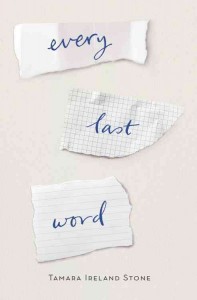
I was eager to read this book because of my own experience with Pure-O OCD. For those who don’t know, Pure-O OCD is a lesser-known form of OCD that “has fewer observable compulsions, compared to those commonly seen with the typical form of OCD (checking, counting, hand-washing, etc.)” It was very obvious that Tamara Ireland Stone did a lot of research and took her time interviewing the teen who inspired her interest in this topic. Sam’s intrusive thought spirals and panic attacks felt very real, and her therapist sounded authentic.
Ever since kindergarten, Samantha has been a part of a clique called the “Crazy Eights.” Even though she finds herself drifting from the group, and despite the fact that her therapist has recommended that she work on finding new, less “toxic” friends, Samantha feels stuck. She is too afraid that parting with the clique will leave her without any friends and also make her a target of their bullying and gossip (like another girl who previously left the group). Because of her OCD, Samantha lives in constant fear not only of her intrusive thoughts and panic attacks, but also that people will find out how “crazy” she is. When Samantha meets a girl named Caroline, who offers to show her something that will “change her life,” she actually goes for it. She follows Caroline, discovers a secret poetry club, and starts to make new friends. Writing poetry helps her to work through her feelings, and making new friends helps to boost her confidence… But will it be enough for Samantha to finally accept and just be herself?