Me Before You: a Novel by Jojo Moyes

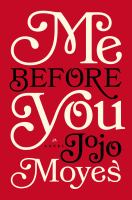
Me Before You

When the cafe where Louisa Clark works as a waitress closes, she winds up working as a companion for Will Traynor, a quadriplegic confined to a wheelchair.  Before he was struck by a motorcycle, Will had been an Alpha male, an aggressive businessman who traveled the world and enjoyed mountain climbing and other demanding sports.  Now his girlfriend is gone, he can only move one hand slightly, and he is subject to serious and painful infections and medical complications.  Upbeat Louisa eventually figures out that her role is primarily watcher — Will is depressed and suicidal.  She determines to prove to him that life is worth living, even given his current limitations.  She actually gets Will to laugh, they have a variety of outings, and Louisa finds herself falling in love.  But is this enough for Will?  What if it isn’t?  Who decides if he lives or dies? A powerful, thought-provoking novel.

Legend by Marie Lu

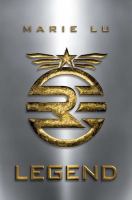
Legend

In post-apocalyptic North America, two countries have replaced the former United States of America — The Republic and The Colonies.  Fighting against both of them is also a rebel group that calls itself the Patriots.  Though it isn’t clear if The Colonies are any better, readers can easy ascertain that The Republic is not so much a republic as a totalitarian regime.  This story is told from the alternating perspectives of characters named Day and June —  Day is an independent anarchist who refuses to work for the Patriots but still does everything in his power to sabotage The Republic in their war efforts against The Colonies; June is a military prodigy who got a perfect score on her entrance exams and has been fast-tracked through military training school.

I think the duel narration was a great way to make readers more sympathetic to characters on both sides of the spectrum and to gradually unfold details about what is happening both around the country and in Los Angeles [where both Day and June live].  The truth is, while life is clearly better for some people in The Republic, no one is truly free.

Guy Langman, Crime Scene Procratinator by Josh Berk

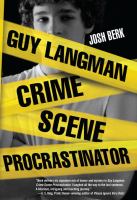
Guy Langman

Guy Langman wasn’t really good at anything — quite the opposite of his dad who seemed to be amazing at everything without even trying.  Guy was rather thrown when his dad died (even though his dad was technically old enough to be his grandfather), and became suddenly intrigued by all things having to do with death.  So, it wasn’t exactly a stretch for him to accept an invitation from his best friend, Anoop, to join Mr. Zant’s Forensics Club.  (Especially since it provided a chance to impress some cute girls!)  For once in his life, Guy really cared about something and was actually good at it.  Which worked out rather nicely as some mysteries popped up in his own life…

My Name is Parvana by Deborah Ellis

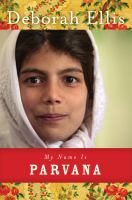
My Name Is Parvana

American military personnel found Parvana in a bombed-out school building, so they brought her back to their base as a suspected terrorist.  Because she refused to speak, the interrogations continued day after day.  During that time, Parvana escaped into her memories — her flashbacks serving to provide readers with further information about her past.  With the information gleaned through those flashbacks, it was easy to see why Parvana didn’t feel comfortable talking to the soldiers who were interrogating her.  Between her experiences under the oppressive Taliban regime and the further struggles her family faced in the time after the Taliban was ousted, she learned that people in power didn’t always tell the truth and that speaking freely often made things worse.  Definitely an eye-opening book about what it means to grow up female in the Afghanistan and how the American military presence has both helped and hindered Afghanistan’s progress.

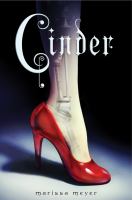
Cinder by Marissa Meyer

Cinder

There are a lot of fairy tale retellings out there, but I was especially impressed by the fact that Cinder was both evocative of Cinderella and a major departure from the original story.  In this story, Cinder is a 16-year-old cyborg who constantly works to support and care for her evil stepmother and her two stepsisters.  She rarely has time for herself, but does her best not to complain because she knows her stepmother could easily “volunteer” her to be a test subject for letumosis [plague] vaccines instead.  While working in her booth at the market place one afternoon, she finds herself face-to-face with Prince Kai.  As it turns out, Cinder’s reputation as the best mechanic in New Beijing led Prince Kai to disguise himself so he could meet her and ask whether she would be willing and able to fix his droid, Nainsi, who suddenly stopped working.

Immediately after this clandestine meeting, though, Cinder’s entire life is turned upside-down because her stepsister Peony contracts letumosis and is put into quarantine.  Not only is Cinder worried about losing one of the only people in the world who actually cares about her, but her stepmother is blaming her for Peony’s illness!  Trying to balance her regular responsibilities, her promise to help Prince Kai, and her desire to help Peony, nevertheless, proves extremely difficult.  And while many girls in New Beijing would give anything to dance with Prince Kai at the upcoming ball, Cinder couldn’t care less about attending…  She has too many other things to worry about.  Yeah — this is definitely *not* your typical Cinderella story.

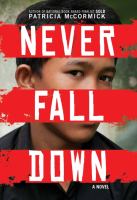
Never Fall Down: A Novel by Patricia McCormick

Never Fall Down

If I didn’t know the horrible truth, I might have thought McCormick had gone overboard with the horror and tragedy in this story. I sometimes find myself asking, as I read, “How much can possibly happen to one character?”   In this case, though, I knew that the novel was based on the true life story of a boy named Arn Chorn-Pond. This novel was only fictional inasmuch as Arn couldn’t possibly recall every detail of every day and every conversation he had over the course of 4 years. The sad reality is that the general timeline and events of this story truly happened to him, to his family, and to his country.

It still boggles my mind to think of how much devastation the Khmer Rouge wrought on Cambodia, especially since people rarely speak of it. How does a militant political group wipe out nearly 2 million people in just under 4 years without getting more than a footnote in many high school world history classes? People talk about the Holocaust and vow to never let something like that ever happen again, but they make no mention of Pol Pot’s reign of terror or the many genocides [some still taking place!] in African countries since the 1940s. It’s disgusting how often these events will go unmentioned just because it’s easier *not* to talk about it, and I applaud Patricia McCormick for writing this book.

I hope this story will help bring more attention to both the unfortunate history of Cambodia and to the subsequent efforts Arn Chorn-Pond has made to help other “children of war” and to keep Cambodian culture alive. For a historical overview of the Khmer Rouge in Cambodia, check out the Historical Overview of the Khmer Rouge at the Cambodia Tribunal Monitor. To learn more about the humanitarian organizations Arn Chorn-Pond founded in response to his experiences as a child in war-torn Cambodia, visit the websites for Children of War and the Cambodian Livings Arts.

Abundance: A Novel of Marie Antoinette by Sena Jeter Naslund

Abundance

Having read Ahab’s Wife by Naslund many years ago (a book I would highly recommend as well), I decided to try this one. I was thoroughly pleased with this book. The story of Marie Antoinette is told in the first person by Marie herself so the perspective she has on everything around her is extremely engrossing. She begins her story as a young girl getting ready to be married off to Louis, and even though she knows she was bred for this and is excited, she’s also very worried about leaving her home and her family, especially her mother.

All of Marie’s recollections of her life from her wedding right up until when she and her own family are imprisoned are recounted here. The book is fascinating to read and so descriptive you almost feel like you are at Versailles. This is definitely a book worth reading.

Regine’s Book: A Teen Girl’s Last Words by Regine Stokke

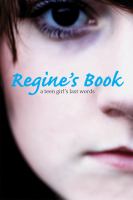
Regine's Book

I couldn’t possibly do any better than the publisher’s book description, so I am copying it verbatim:  Regine’s blog about living with Leukemia gained a huge following, and eventually became this book. She writes openly about emotional and physical aspects of her 15-month struggle to recover, and explains how her disease impacts her life. In the course of her illness, Regine has photography exhibits, goes to concerts, enjoys her friends & family, and advocates for registering as a blood and bone marrow donor. She was a typical teenager with an amazing will to live; and the lessons she learned have relevance for all of us. She died at home on December 3, 2009 with her family and cat by her side.  This book actually reminded me quite a bit of Jenny Downham’s book Before I Die, aside from the sad fact, of course, that Regine’s story wasn’t fiction.

Reading this book has helped me to better understand what many cancer patients go through, and it has also helped me to put some annoying bits of my own life into perspective.  Is is the end of the world if I get stuck in traffic on the way to work?  No one will die if I get to the library five minutes late.  Is it the end of the world if I forget a coupon and accidentally pay an extra dollar or two for my groceries?  Hardly.  Poor Regine really did get some “end of the world” news — as a teenager, no less — and still managed to stay extremely positive.  Even after reading her blog/book, I can’t wrap my brain around how she was able to muster up the will to carry on and to hope for a cure when every indication was that her condition was beyond hope.  Though her life was short, she lived as fully as possible and gave her life purpose.  She did a lot to raise money and awareness for cancer treatments like bone marrow transplants — and she inspired me to go to marrow.org to add myself to the national bone marrow registry.  (You can register yourself, too, if you’re a healthy adult between the ages 0f 18 & 44!)

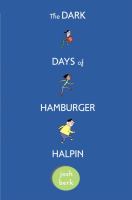
The Dark Days of Hamburger Halpin by Josh Berk

The Dark Days of Hamburger Halpin

Being the new kid at school can be really tough.  But being the new, fat, deaf kid in a school without an interpreter or a captioning system?  I can’t even imagine!  Luckily, Will Halpin has an uncanny ability to lipread and doesn’t much care what the “cool kids” think.  He has surmised, though, that everyone else is practically willing to kill each other for an invite to the upcoming birthday party of an über-popular jock named Pat.  This story isn’t just about the difficulties Will faced with main-streaming and making friends, though.  The real story is about how Will and Devon Smiley forged their new friendship while trying to figure out how Pat ended up dead during a field trip to the Happy Memory Coal Mine.

I enjoyed this story for a number of reasons, but first and foremost is the fact that there a good mix of humor and mystery.  It was definitely more Castle than CSI, if you know what I mean.  The fact that Josh Berk even managed to include a lot of information about deaf culture in a way that was neither clunky nor didactic was also awesome.  The original book cover is honestly the only thing I didn’t like about this book.  Luckily, it has been re-released with a new cover that is more likely to appeal to teens and also hints at the mystery within.

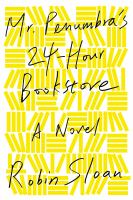
Mr. Penumbra’s 24-Hour Bookstore by Robin Sloan

Mr. Penumbra's 24-Hour Bookstore

Clay Jannon knows there is something odd about the bookstore in which he is newly employed, with its mysterious owner, its towering shelves accessible only by ladder, its section of encrypted books and its anxious late-night customers.  When he meets Kat, a data visualization expert at Google, they work together to decode the store’s strange volumes.  Their discovery reveals a secret society bent upon breaking the ultimate code encrypted by Aldus Manutius, the famed early 16th century printer.  Clay and Kat harness the resources of Google in an attempt to crack the code, a challenge that also leads them across the country to break into the society’s headquarters.  There, they discover secrets about the society that its president is determined to protect.

Mr. Penumbra’s 24-Hour Bookstore seamlessly blends — and celebrates — old school and new school technologies in a fun romp of an adventure and an engrossing read.

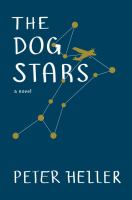
The Dog Stars by Peter Heller

Dog Stars

This is the story of Hig, a flu survivor, who with his faithful but elderly dog, Jasper, works hard to survive.  Life is tough in the future after the majority of the population has died from a new strain of the flu.  There are no zombies, vampires or werewolves in this story, but it is still downright scary!  Most of the remaining population are not nice people.

Hig’s only human friend works with him to survive, and he can still fish, hunt, cook, and fly his 1956 Cesna, but Hig misses life as it was.  One day he flies beyond his return point in the hope of finding something more.  Full of philosophical musings, sometimes meaningful, sometimes less so, this is an enjoyable and high-tension story of characters you will care about.  Ignore the swears —  life is brutal here.

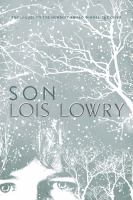
Son by Lois Lowry

Son

When I read The Giver, Gathering Blue, and Messenger, I thought it was a trilogy.  I had thought the story to be pretty well wrapped up at the end of Messenger, to be honest.  I was more than happy, nevertheless, to find out I was wrong.  Not only am I a big fan of Lois Lowry, but I have a major weakness for dystopias!

This story begins in the same society as The Giver, but Jonah is not the main character.  Instead, we see the society through the eyes of a young girl named Clair.  We are with Clair as she gets her work assignment — to be a birthmother — and also when the delivery of the “product” she was carrying goes wrong and results in a Caesarean.  Although she is made to wear a mask and can’t see the baby, she manages to find out that her baby, #36, was a boy.  A son.  Her love and longing for her son is unheard of in that society, so she has to pretend not to think about him and can never admit that she dreams about being able to raise him as her own.  I can’t say much more without major spoilers, but rest assured that this tale will reunite characters from all of the books in the series while demonstrating the lengths to which a mother will go for her child.

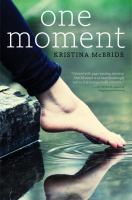
One Moment by Kristina McBride

One Moment

Maggie is suffering from memory loss, but she isn’t really sure whether she wants to get back those missing memories.  Why?  Because those memories would fill in the details of exactly what happened immediately before and after her boyfriend, Joey, accidentally fell to his death.  The story her friends gave her [and the police] is that Joey died as the result of a cliff dive gone wrong… but Maggie is afraid there might be more to it than a mere slip.  Could it have been something *she* did wrong?  After all, Joey had jumped from that cliff countless times, and he was supposed to be helping her with her first jump.  Her best friends — Adam, Shannon, and Tanna — are doing the best they can to support her, but they’re having a hard time even managing with their own grief in this tragic time.  A perfect blend of mystery and contemporary realistic fiction, especially if you’re in need of a good cry.

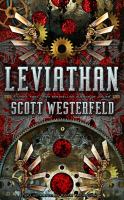
Leviathan by Scott Westerfeld

Leviathan

In this alternate history of World War I, the German forces [called Clankers] used steam-powered war machines like tanks and the Allied forces [called Darwinists] utilized living creatures as war machines.  The Leviathan, for example, was an airship made from a living whale-like creature.  Though it looked much like a Zeppelin, it was MUCH cooler because it depended on a complex ecosystem in which the waste-products of smaller organisms [living inside]  provided the helium-like substance that made it float.  Add that to the fact that people were walking around inside the beast/ship, and it’s not hard to understand why a science geek like me was just as enthralled by the Darwinists’ creations as I was with the whole rest of the story!  If you like action and adventure, and you’re not opposed to possibly learning something about world history, this is a book you should probably read.  (Just be sure to check out the author’s note in which Westerfeld explains which events/facts were true to history and which he created for the sake of his story.)

Home Front Girl: A Diary of Love, Literature, and Growing Up in Wartime America by Joan Wehlen Morrison, edited by Susan Signe Morrison

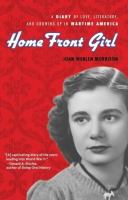
Home Front Girl

When it comes to World War II, there is historical fiction aplenty.  Many authors have done intense research to create rich stories of things that could have happened in that time, but there is nothing like a primary document to help readers appreciate exactly how people felt and what they actually went through.  I’m guessing that is exactly why the Diary of Anne Frank resonated with me when I read it in middle school.  Anne was a real girl, she was about my age [13], and she had actually lived through the things I was reading about.  As I read Anne’s record of her time spent in that tiny apartment, hiding from the Nazis and hoping to make it out alive, I gained a new appreciation for the simple things in life.  Until I read her diary, I took it for granted that I had enough food to eat, was able to spend time with my friends, and could open a window for extra light and fresh air whenever I felt like it.

Joan Whelen Morrison’s diary is both similar to and completely different from Anne Frank’s diary.  It’s different, obviously, because Joan lived in America and didn’t live in fear of being found and killed by the Nazis; her location afforded her a great many freedoms Anne was denied.  Joan’s diary is extremely similar, though, because she was also a teenage girl whose writing not only chronicled her daily life and the events unfolding around her but also revealed some incredible insights about life.  Joan’s diary gives readers a peek into the life of a typical [American] teenage girl who lived during the time of the Great Depression and leading up to World War II.  The tone of her diary ranges from light and funny entries about school and boys to more serious, with topics like the explosion of the Hindenburg and the bombing of Pearl Harbor.  People who enjoy reading and learning about this time in history won’t want to miss Home Front Girl.