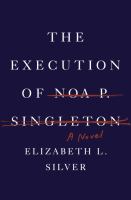
The Execution of Noa P. Singleton by Elizabeth L. Silver

The Execution of Noa P. Singleton

I couldn’t tear myself away from this novel.  It opens with Noa P. Singleton, inmate number 10271978 in the Pennsylvania Institute for Women, introducing herself and telling us that “…I pulled the trigger. Post-conviction, I never contested that once.”  She is on death row and nearing her execution date.

Noa is unnervingly calm as she begins to tell us the back story.  She is adamant about her guilt and sees the past ten years spent in prison and her impending execution as the logical outcome of her crime, the murder of pregnant Sarah Dixon.  She isn’t even particularly ruffled when high-powered attorney Marlene Dixon, Sarah’s mother, visits her to announce that she no longer believes in the death penalty and will be pursuing a clemency petition for Noa.   Marlene just wants to know why — why did Noa shoot her daughter?  Noa has never answered this question publicly, and does not intend to now.  Noa’s story is so knotted and convoluted that it takes the entire book to tease it out.

This novel is about identity– self-identity and imposed identity, and about all of the little (and enormous) factors that go into making us who we are, or, at least, the factors that propel us to a certain place and time and point of action.  The opening passage sets the tone beautifully:

In this world, you are either good or evil.  If not, then a court or a teacher or a parent is bound to tag your identity before you’ve had a chance to figure it out on your own.  The gray middle ground, that mucous-thin terrain where most of life resides, is really only a temporary annex, like gestation or purgatory.

In telling Noa’s story, author Silver does not tackle the morality of capital punishment directly.  She never asks us explicitly if Noa deserves to be on death row.  She doesn’t push us to judge.  Feel as you will about capital punishment, she seems to say, but consider the person; consider the process.  And then maybe consider it all a little further. Noa P. Singleton is subtle, complex and quite stunning.
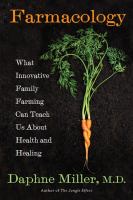
Farmacology: What Innovative Family Farming Can Teach Us About Health and Healing by Daphne Miller

Farmacology

This is one of those nonfiction books that delivers vitally important information in an engaging, can’t-put-it-down, readable format.  Miller’s examination into the parallels between farm (and soil) health and human health is fascinating. Her writing style is straightforward and authoritative, but large doses of warmth, inquisitiveness, and personal asides make the book as engrossing as any work of fiction.  Her hand drawn maps of each farm that she visited add visual appeal and a great sense of place. Read Farmacology and you too may find yourself with the urge to run to your nearest local farm to plunge your hands into the soil and root around in its microbiotic goodness.

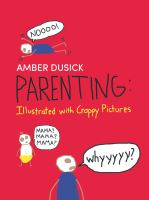
Parenting: Illustrated with Crappy Pictures by Amber Dusick

Parenting

This is one of the funniest books about parenting I have ever read!  I had heard about and stumbled upon Dusick’s blog [http://crappypictures.com/] a few times, but I much preferred reading the book.  That’s probably because the book has stories and illustrations of similar types all brought together into a more cohesive story, and I’m generally too OCD for the “bits and pieces” style of blogs unless it’s someone I know personally.  But, I digress.  My favorite thing about this author is that she’s managed to find the perfect balance of sarcastic grumbling about the crappy things parents have to put up with and recognition of the moments that make parenting worthwhile.  I think this is a must read for all parents, people who think they’re ready to become parents, or people who are about to become parents — especially the section on “what it’s like to (not) sleep at night”…  Priceless!

what it's like to (not) sleep at night

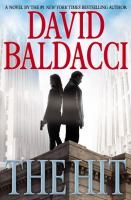
The Hit by David Baldacci

The Hit

If you like suspense, action and lots of twists, then you will like this book. It’s basically the story of two master assassins that the government calls in to get their worst enemies. Will Robie and Jessica Reel are considered the best of the best. The story starts out with Reel turning on members in her own agency, which in turn forces the agency to send Robie out to kill her. There are a lot of cat and mouse traps. Questions arise through the action as to who exactly the bad guys are, and Robie starts to ask questions about Reel’s motives. The story also reflects on how these two assassins’ backgrounds led them to become trained killers. The final answers are surprising. I would recommend this book because it’s quick and full of suspense.

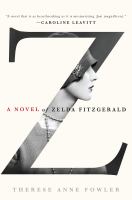
Z : A Novel of Zelda Fitzgerald by Therese Anne Fowler

Z

Zelda and Scott Fitzgerald were the embodiment of the Jazz Age.  With the newest adaptation of The Great Gatsby  showing at movie theaters recently, I thought this book would be interesting. The author writes as if Zelda herself is telling the story of her life that pre-dates her meeting Scott, her courtship and then marriage and their resulting married life, with the many ups and downs they have. They lived life as large as they could, often without the money to back that up and consequently were in debt to friends, family and banks, waiting for the next great book to be written by Scott. That was hard to accomplish though when they were expected at so many parties, often drinking to excess, making any work on future novels impossible for Scott. And while Scott had successes, there was no way to keep up with his voracious drinking and carousing with women to sustain any normal family life. Zelda had her work cut out for her, especially after the birth of their daughter, Scottie. Zelda tried at different points in their marriage to write as well, but Scott was often jealous of his wife’s accomplishments and made sure to squash any attempts she made. Sadly, Zelda also had struggles with her mental health and spent long periods of time in sanitariums. I would highly recommend this book, and enjoyed the way the author spoke in Zelda’s voice. It really gave the reader a new take on this famous couple’s life.

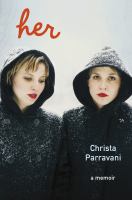
Her : A Memoir by Christa Parravani

Her

This was a fascinating memoir written by the author about her identical twin sister, Cara. I was drawn to this book because I had heard that the two girls had been raised and went to school in the Capital District and there are certainly many references to local landmarks. As you may imagine, the girls are more than close growing up and share many interests. However, Cara veers down a different path as she spirals into drug abuse. She also is the victim of rape and that also serves to send her into further descent. Christa tries to help her sister over and over again with various results. Unfortunately her sister dies of a drug overdose and leaves Christa behind to try and pick up the pieces. Christa then sees all too clearly that the odds are not in her favor of surviving – over 50% of surviving twins don’t live past 2 years after their twin dies. Christa then has her own struggles as she tries to reconcile what happened to her sister and slowly but surely fights back to live in the present. This is a powerfully written book, at times funny and heartbreaking but ultimately shoings how strong the human spirit is.

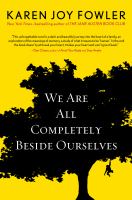
We Are All Completely Beside Ourselves by Karen Joy Fowler

We Are All Completely Beside Ourselves

Main character Rosemary has lost so much, and in the course of her narration she revisits episodes from her past, trying to make sense of that loss and reexamining her own role in her family’s tragedy.

When she was five, Rosemary lost her sister and still harbors guilt over events leading to that loss. Soon after, her only other sibling, brother Lowell, left home in grief and anger and never returned. Left alone with her scientist parents, her father drinking and her mother unhinged, raw, and remote, Rosemary grows into a self-conscious, directionless misfit.

When you learn that the sister Rosemary is mourning is a chimpanzee named Fern, brought to live with the family as an experiment in human-chimpanzee communication, you may wonder why Rosemary’s sense of loss is so profound. But Fowler develops these characters- including Fern- so thoroughly, and portrays their relationships in such glimmering lucidity, that by the end there is no denying that Rosemary and Fern bonded as sisters, twins. Rosemary did not lose a test subject, a friend, or a pet; she lost her sister, her other half.

As Lowell’s animal rights crusades garner FBI attention and Rosemary stumbles through college life in a haze of longing, the circumstances of Fern’s removal from the family are slowly revealed. Which leads to the question, so consuming to Rosemary and reader alike: where is Fern? Is she still alive? Communication from Lowell, now a fugitive, leads Rosemary to finally confront her past.

Guilt, family dynamics, ethics, animal rights, humanity and humanness all wind through the story, making it so compelling, so impossible to put down. It is a credit to Fowler that she does not romanticize Fern’s place in the family.

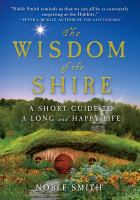
The Wisdom of the Shire by Noble Smith

The Wisdom of the Shire

This book had me utterly charmed at the dedication, which is a hint at all the goodness that lies ahead. There is no way to put the book down after reading that gem.

Much of the wisdom presented is common to 21st-century denizens with any civic conscientiousness and environmental awareness — reuse, recycle, eat local, make nice with your own personal Gollum — but presented through the lens of Hobbitness, the message has a freshness and appeal that is hard to resist. Do not, however, think for a minute that the Hobbit angle is simply a gimmick. Smith is a deep thinker with keen intellect, a big, generous heart, and a wicked knowledge of The Lord of the Rings. He has captured the essence of Tolkien’s lands and characters and seamlessly relates them to life in our stressed, hurried, consumer world. Each and every chapter gave me something to enjoy, to take away and ponder, to apply to my own life. From the big (challenge corporate and governmental corruption) to the simple (get more sleep!), Smith’s suggestions are inspired and inspiring.

The Wisdom of the Shire will be enjoyed not only by devoted Tolkien fans, but also by anyone with a passing familiarity with the books or films.

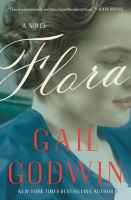
Flora by Gail Godwin

Flora

In the mid-1940s, ten year-old Helen lives in a rambling old house, formerly a convalescent home, on a mountain in North Carolina. Her mother is long dead, her beloved grandmother has just passed away, and her father is leaving for the summer to work in Tennessee. Her father recruits a distant cousin, 22-year-old Flora from Alabama, to stay with Helen for the summer. Helen considers Flora a country bumpkin and a twit. Flora has suffered losses of her own and is determined to connect with and care for Helen. Helen learns to tolerate Flora’s pink-cheeked guilelessness when she realizes that Flora is a source of information about Helen’s mother and grandmother. Helen pastes together the snippets of family history revealed by Flora and begins to see a different picture of the past than she had imagined.

Foreshadowing is thick and ever present as Helen narrates their story from a decades-later vantage point, beginning with the lovely opening line:

There are things we can’t undo, but perhaps there is a kind of constructive remorse that could transform regrettable acts into something of service to life.

It is clear that this summer isn’t going to go well for Helen, and waiting for that pivotal moment when we finally learn why is a perfectly measured torture.

There are so many layers to this novel, and days after finishing it I am still turning each facet over in my mind, finding connections and consequences and entertaining “what-ifs.” This is one for my top 10 list. A must-read.

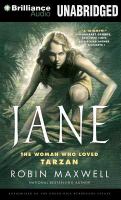
Jane: The Woman Who Loved Tarzan by Jane Maxwell

Jane - the woman who loved Tarzan

(Audiobook)  It’s 1905 in Cambridge, England.  This story follows the adventures of Jane Porter from her time as the only woman student in Cambridge University’s medical program to her ill-fated travels in Africa with her father.  There they search for fossils that will prove Darwin’s theories.  Jane, after being injured, is rescued by Tarzan.  Various reviews of the book are critical of many aspects of the story that vary from the original Tarzan of the Apes series.  This book is, however, authorized by the Edgar Rice Burroughs Estate.  I was prepared to like the audiobook and, in spite of changes in the story, found this to be a fine romance with strong characters, well read and performed, and very enjoyable.  Jane is a woman ahead of her time and takes a dominant role as the main character.

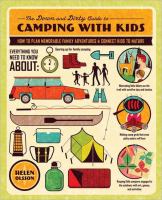
The Down and Dirty Guide to Camping with Kids: How to Plan Memorable Family Adventures and Connect Kids to Nature by Helen Olsson

Down and Dirty Guide

Much like the image-cluttered cover and the super-long title, this book is absolutely PACKED with information about camping with kids!  I used to go [tent] camping every summer before becoming a mom, but I have been an absolute wimp about trying it with kids.  My husband and I have been talking about finally going this summer — with our 8- and 3-year-old children — and then I saw this book on display.  I took it as a sign!  I will admit that I didn’t have the patience to read through everything, but I found the packing lists, “smart tip” boxes, and lists of potential activities to be priceless.  Granted, I haven’t put any of this into practice yet… But I can’t imagine that any failures I might experience would be the fault of this author!

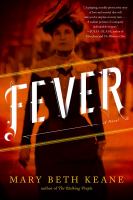
Fever by Mary Beth Keane

Fever

“Typhoid” Mary is brought to life in this compelling work of historical fiction. Mary Mallon emigrates to New York from Ireland on the eve of the 20th century, where she works her way up from being a lowly laundress to a respected cook. A tough, independent woman, Mary is sought after by rich and powerful families in the city for her cooking skills. But, as she moves from family to family, a chilling pattern emerges. Although Mary enjoys robust good health, family members and their staffs seem unusually prone to the fevers and ill health associated with typhoid, and the weakest succumb to the disease.

One determined “medical engineer”  doggedly researches her movements and identifies her as an “asymptomatic carrier” of the deadly sickness, making her a hunted woman. Mary is arrested and moved to an isolated island where ill New Yorkers are quarantined. She is eventually released, but forbidden to work as a cook. Her stubborn refusal to believe the truth about herself leads her to seek jobs under assumed names, and to evade the regular testing she has been ordered to endure. The disease continues to spread wherever she goes.

As her story unfolds, early 20th-century Manhattan comes alive. Mary is a fiercely dramatic character who captures your imagination and sympathy, even as you wish for a happy ending that will never come true.

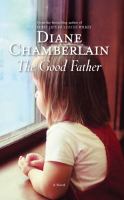
The Good Father by Diane Chamberlain

The Good Father

This is a powerful emotional portrayal of parenthood and the issues parents deal with. The story is told through the eyes of three main characters, Travis, Robin and Erin, who become linked together as the story unfolds. Travis Brown, a young single father trying to raise his daughter, Bella, becomes unemployed and homeless which leads him into a dangerous situation to provide for her. Robin is trying to focus on her new life after being sick for so long, but can’t forget the memory of the baby she once gave up. Erin is grieving for the daughter she lost, and shattered by grief, but finds a new way of coping with constant heartache. I have never read Diane Chamberlain before but I will definitely read more of her novels. I like how she writes with various character acting as narrators, which makes the story a quick and easy flowing read.


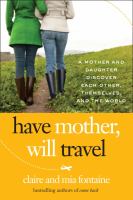
Have Mother, Will Travel by Claire and Mia Fontaine

Have Mother, Will Travel

I was intrigued by this book since I had read a previous book by this mother/ daughter team called Come Back.  A mother and daughter taking time together to travel is something I’ve done to a lesser extent with my own mother, and I’ve thought about doing it with my own daughter as well. Both Claire and Mia have a chance to explain in their own words their take on different aspects of their trip. It’s fascinating to hear from both of them what they are thinking about situations they’ve been in while traveling. As you can imagine, they learn about each other on a much deeper level, and that enhances their understanding of each other. This was especially  interesting to me because my own daughter and I are on a similar path to our new relationship since she’s been in college these past two years. I really enjoyed this book.

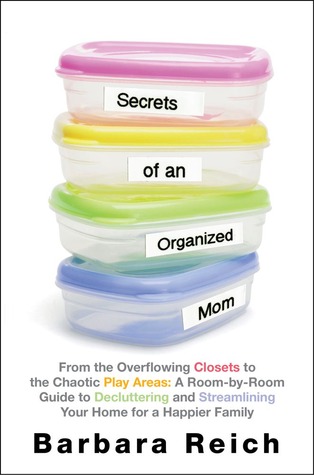
Secrets of an Organized Mom by Barbara Reich

Secrets of an Organized Mom

When I saw this book on display among the new books of the Parenting section, I swear I heard it call my name!  Though I have OCD and clutter has always been able to cause me undue anxiety, my house has never been completely organized.  Many of my friends seem to think that it is well organized, and maybe it is pretty good compared to some other houses, but I know there is still a lot of room for improvement.  Being a working mom, I rarely have enough time to do more than get by from one week to the next.  After all, keeping a house organized while staying on top of the billion or so other things a mom needs to do is not an easy feat!  I often say that I practice “subsistence living” — I am not falling behind, but I only seem to get the bare minimum accomplished.  I would love to feel like I am actually making headway on the clutter [i.e. getting rid of it] instead of barely getting by, though, so I figured I would read this book and give her methods a try.

The first chapter lays out Reich’s ground rules, and subsequent chapters help you tackle specific areas of the house.  I like that you can apply her four-step method and her “Ten Commandments of Organizing” to pretty much any room/organizational challenge.  And, while she does talk about children’s areas and children’s stuff, this book could work just as well for people without children if they simply skip the parts that don’t apply.  The practical advice paired with a “tough love” attitude made me give it a try… and seeing the end result in my 8-year-old son’s room sealed the deal!  He is happy that he has more room to play and that he can find all of his toys, and I’m thrilled that the “place for everything” structure empowers him to clean it all up when he’s done. Almost one week later, his room still looks like it belongs in Better Homes and Gardens.  🙂

I absolutely love this book!  So much, in fact, that I just ordered a copy of my own — to reference in the future and maybe even to lend to friends/family who want to check it out.