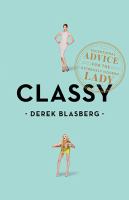
Classy: Be a Lady not a Tramp by Derek Blasberg

While it may seem odd to find a man doling out advice to young women on how to be classy, Blasberg’s experiences working in the fashion and entertainment industries give him credibility as a resource.  Unfortunately, we live in a time when many famous young women are TERRIBLE role models.  It’s not uncommon to see young actresses with barely any clothing behaving in a less than classy manner (to put it politely).  Blasberg provides excellent “lady vs. tramp” visual guides for topics like dressing appropriately, sitting in a skirt, and dating,  as well as etiquette tips for a multitude of situations.  There are sections on clothing, parties, travel, friendship, dating, facing temptation, and the importance of lifelong learning.  I absolutely LOVED this book because it shows young women that looking trashy is not the best way to get attention, that there are many things more important than worrying about your physical appearance, and that dressing/behaving appropriately can still be lots of fun!
Runner by Thomas Perry

Jane Whitefield has been happily married for nine years.  For ten years prior to her marriage,  she served as a guide to help people in need to disappear and start over with new identities.  She was a very good at that, but it was dangerous, and she promised her husband she would quit.  Jane has kept her word — until now, when there’s a pregnant woman on her doorstep with nowhere to go, and killers right behind her. It looks as if Jane will have to come out of retirement and help one more deserving person become a runner.  Most recent of an excellent series.

Third World America: How our Politicians are Abandoning the Middle Class and Betraying the American Dream by Arianna Huffington

Written by the founder of The Huffington Post and popular liberal pundit, Third World America describes the effect our current economic climate is having on the middle class. Jobs are disappearing, our infrastructure is crumbling, education suffers, and middle-class Americans are described as “an endangered species.”  Extremely readable, with many chilling examples of economic and personal loss, this book makes concrete suggestions for averting catastrophe. Liberals will love it and conservatives, while not agreeing with all her assertions, should find much of interest, too, as Huffington offers hope for difficult times.

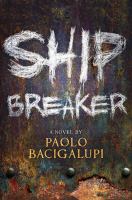
Ship Breaker by Paolo Bacigalupi

The world has run out of oil, and global warming has melted the polar ice caps; this is certainly not the world as we know it.  Most people live in poverty and take whatever work they can find, no matter how dangerous, just so they can survive.  Nailer has found work with a “light crew,” which means wriggling through the ductwork of beached tanker ships along the Gulf Coast to scavenge for scrap metals.  As long as he makes quota, and doesn’t get too big to fit through the ducts, he can stay on the light crew. Nailer does his best to avoid his alcoholic/druggie father, but still begs Sadna (his best friend Pima’s mother) to save his dad as a violent hurricane blows through town. After the storm, Nailer and Pima cannot find their parents, but manage to stumble upon a shipwrecked clipper ship. The ship has enough scavenge to make them both filthy rich, but there’s one problem — the “swank” girl trapped inside. Do they kill her to keep their claim on the ship, or do they rescue her and add to their burden?

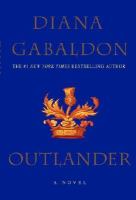
Outlander by Diana Gabaldon

Outlander is the first in a series of seven novels (with more coming!)  Hurtled back in time more than two hundred years to 1743 Scotland, World War II nurse Claire Randall finds herself caught in the midst of a world torn apart by violence, pestilence, and revolution.  Her application of 20th-century attitudes and medical knowledge to a more primitive time is fascinating; the history of the clans’ fight for independence is compelling; and the love that grows between Claire and young soldier Jamie Fraser is unforgettable.  The subsequent books continue their story, bringing them to Revolutionary War-era America. You’ll want to read it again and again!

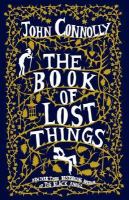
The Book of Lost Things by John Connolly

A coming-of-age tale centered upon young David, who has lost his mother and resents his new stepmother and baby brother.  Trying to escape his circumstances, David stumbles into an eerie fairy tale world of knights and beasts much like those in the stories his mother used to recount.  David sets out on a quest to find the king, whose Book of Lost Things holds the secret to his return home and, David hopes, perhaps even to his mother’s return to life.  Reminiscent at times of Lewis’s Narnia, at others of the Brothers Grimm, The Book of Lost Things will resonate with those who still believe in the magic of childhood.

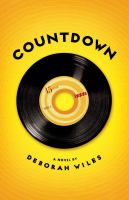
Countdown by Deborah Wiles

The year is 1962, and twelve-year-old Franny lives in Washington, DC with her family.  In the days surrounding the Cuban Missile Crisis, everyone around her is living in uncertainty and fear.  In addition to dealing with air raid drills and duck-and-cover practice at school, Franny is trying to figure out the messy business of growing up.  What makes this book special is its documentary format — it is sprinkled with actual newspaper clippings, photographs, brief vignettes about famous people, and ads from the time period. Even though this book is written for older children and young teens, adults will also enjoy it and the feeling of being sent back in a time machine to the 1960s.

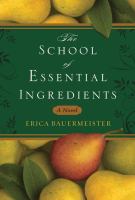
The School of Essential Ingredients by Erica Bauermeister

Once a month, on Monday evening, eight students meet in Lillian’s restaurant for a cooking lesson.  They are young and old, male and female,  married or single or widowed, with varying degrees of kitchen experience.  They think they’ve come to learn Lillian’s secrets to producing wonderful food, and they do, but they also gain so much more from the classes.  Their lives become entwined, and they discover  over the months the power that  lovingly prepared food has to change people.   Reminiscent of Choclat by Joanne Harris.

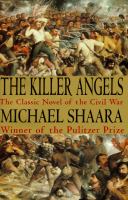
The Killer Angels by Michael Shaara

The format of this 1974 Pulitzer Prize-winning historical novel of the Battle of Gettysburg is unconventional, alternating between the reflections of Northern and Southern soldiers, both high and low ranking. The result is a personal and compelling description of the battle that many historians see as a critical turning point in the ultimate resolution of the Civil War. Mr. Shaara’s son, Jeffrey, has written both “prequels” and a sequel to his father’s work, in the same conversational style. The Killer Angels will stand alone, or as part of the series, and will give you an understanding of war in a very personal way. Don’t be surprised if you want to read it again and again!

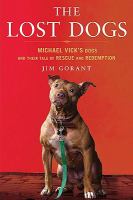
The Lost Dogs: Michael Vick’s Dogs and Their Tale of Rescue and Redemption by Jim Gorant

Football star Michael Vick’s highly publicized conviction for his participation in the horrific “sport” of dog fighting is the basis for this book, but the work done by a dedicated group of volunteers to redeem the victimized pit bulls is the true heart of the book. Although not all of the rescued dogs could be saved, Vick’s fine of $1 million provided the means for the months of rehabilitation that ultimately made new citizens of many of the animals. If you are a dog lover, or if you just like happy endings, these stories of dogs and the people who believed in them will steal your heart.

Zombies vs. Unicorns edited by Holly Black and Justine Larbalestier

This was one crazy anthology!  It wasn’t really what I was expecting —  one unicorn story made mention of farting rainbows, while a few of the zombie stories seemed more like love stories and inspirational stories than horror and gore.  The story introductions, written by editors Holly Black and Justine Larbalestier, were rather humorous arguments as to which of the “teams” was winning [based on the stories so far] and always added something extra to the stories themselves.  The scary thing is, I think I may have been converted from “Team Unicorn” to “Team Zombie” in the end!  If you’re looking for some awesome stories that get away from the typical unicorn and zombie stereotypes, you’ll want to check out this book.

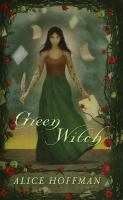
Green Witch by Alice Hoffman

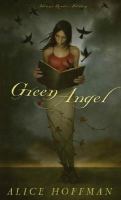
A year after her world was nearly destroyed, sixteen-year-old Green has become the one villagers turn to for aid, expecially to record their stories, but Green will need the help of other women who, like herself, are believed to be witches, if she is to find her best friend and her one true love.  A wonderful, quick read along with Green Angel.  Each can be read in one or two sittings.  Both are haunting and memorable.

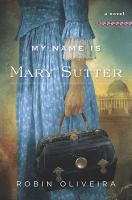
My Name is Mary Sutter by Robin Oliveira

↑ Reserve a copy ↑

This historical novel tells the story of an Albany midwife who longs to be a surgeon during the Civil War.  You follow her as she struggles for acceptance in the medical communities of Albany, Washington, D.C. and finally the battlefields of the war.  For history buffs, the descriptions of battlefield medicine are fascinating (though not for the faint of heart!) as well as the depiction of the early days of the nation’s capital.  For local readers, 1860s’ Albany has some familiar place names.  I appreciated the strong female character as well as the history of the Civil War told from the nurse/surgeon’s view.

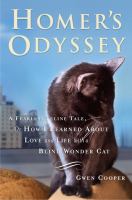
Homer’s Odyssey by Gwen Cooper

One of the best cat stories ever.  Homer loses his eyes to an infection at only a few weeks of age.  When Gwen Cooper adopts this adorable kitten, she thinks she is doing him a favor, but it turns out that Homer gives much more than he gets.  Since all he has ever known is blindness, Homer doesn’t know that he has a handicap, so he lives his life with fearlessness and joie de vivre.  His huge personality and zest for living inspire everyone who has the privilege to meet him.  A true story that will touch your heart.  Don’t miss it.