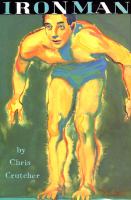
Ironman by Chris Crutcher

Ironman

Chris Crutcher is most definitely one of my all-time favorite YA authors.  Not only is he not afraid to tell it like it is in his books, but he also tells it like it is in the “real world” via Facebook, Twitter, and his blog, Stotan Unplugged.  No matter how controversial a topic may be, he doesn’t feel the need to censor himself.  He believes (and I fervently agree) that teens should not be sheltered from the harsh realities of the world.  If teens have the potential to “live” something, who are we to tell them they shouldn’t “read” about it?  Sadly, I don’t have a review for the first Chris Crutcher book I read — Staying Fat for Sarah Byrnes — because I read it before I started this blog.  But, I have reviews for several other books that I’ve read since then (Angry Management, Deadline, King of the Mild Frontier, Period 8) if you are not familiar with his books and would like a little primer.  I have no idea how I managed to work nearly ten years as a Tween & Teen librarian before reading Ironman (and without yet reading Whale Talk and Stotan!), but I suppose I just need to pace myself and I will get there.

Ironman is the story of a seventeen-year-old guy named Beauregard Brewster (a.k.a. Bo) who is training for a triathlon.  Balancing home life, school work, and training would be challenging enough for most teens, but Bo also has to deal with a father who constantly belittles him and even schemes to try and make him lose that race.  Many times, teens who experience problems at home find that school is a safe haven, but Bo has issues with his English teacher and former football coach, Coach Redmond, as well.  Fortunately, he has a couple of adults in his life who actually have his best interests in mind — Mr. Serbousek, who teaches Bo’s journalism class and also coaches him in swimming, and Mr. Nakatani (aka Mr. Nak), who runs the anger management group Bo has to attend in order to avoid a suspension over an argument with Coach Redmond.  While it can be depressing to read about the (based-on-reality) terrible parents that some kids have to deal with, books like this also serve as a beacon of hope for teens who are living through similarly terrible situations.  Whether it’s just realizing that their situation is not unique or finding hope that the situation can actually get better, albeit with lots of time and plenty of work, books like this definitely matter to teens.  Here’s to hoping you only need this book to make you aware of other people’s problems…
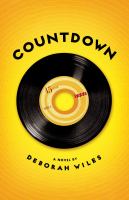
Countdown by Deborah Wiles

Countdown

In October of 1962, my mom and dad were 7 and 13, respectively.  They’ve told me stories of the old “duck and cover” drills they had to do in school and how frightened they were about the potential onset of a nuclear war, but I don’t think I truly appreciated what they went through until I listened to this audiobook.  Experiencing the 13 days of the Cuban Missile Crisis vicariously through a character in a book, even knowing how the entire thing ended, was enough to make me anxious.  I can’t imagine I would have fared well if I actually had to live it.  (I probably would have had panic attacks all day, every day!)  Such is the power of this extremely well-written book and it’s wonderfully produced audiobook.  I was curious how the scrapbook pages would translate in an audiobook, and I was very pleased with the way sound bites were interjected into the story and sometimes woven together.  (It actually reminded me quite a bit of the commercials in MT Anderson’s Feed.)

More striking than the anxiety this story induced, nevertheless, was the hope that it inspired.  One quote, in particular, made such an impression that I pulled over during my evening commute to write it down.  (Because my OCD self was concerned about accuracy, nevertheless, I found a print copy of the book.)

There are always scary things happening in the world.
There are always wonderful things happening.
And it’s up to you to decide how you’re going
to approach the world…
how you’re going to live in it, and
what you’re going to do
.”

Though Franny’s sister, Jo Ellen, was responding to Franny’s fear over the Cuban Missile Crisis, her words can truly be applied to any person’s response to any terrible situation.  And, especially since this book goes beyond the facts of the Cuban Missile Crisis to explore Franny’s relationships with her family and friends, I think this book has a much broader appeal than just fans of historical fiction.

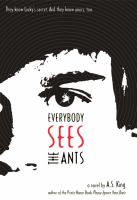
Everybody Sees the Ants by A. S. King

Everybody Sees the Ants

Lucky Linderman’s father patently refuses to acknowledge the problems in his life.  It doesn’t matter whether the problem is growing up fatherless (his father was a POW/MIA soldier in Vietnam), his failing marriage, or his son’s troubles with a bully named Nader McMillan.  He pretty much walks away and tunes out from life when things start to get uncomfortable — often retreating to his job at what Lucky refers to as “Le Fancy-Schmancy Cafe.”  Lucky’s mom is just as bad.  She, too, refuses to acknowledge that her marriage is falling apart and ignores the bullying situation.  (She just doesn’t have as hefty an excuse as her husband.)  Even after Nader takes things too far and hurts Lucky pretty badly, his parents still choose to avoid confrontation and merely plan for Lucky and his mom to go away for the summer.  Staying with relatives in Arizona doesn’t do anything for fixing the marriage or bullying problems, but Lucky does end up making some friends while he’s there.  He also starts working out, under the tutelage of his uncle, and gains a little confidence in the process.  The only question is whether that will do him any good when he returns home.

Though most of this story is fairly standard for YA contemporary realistic fiction, there’s one thing that pushes this book pretty far into the realm of magical realism.  Lucky visits his [POW/MIA] grandfather in his dreams.  For real.  As in, he comes out of his dreams with physical tokens of where he has been.  (It actually reminds me a bit of The Dream Thieves, which is the second book of The Raven Cycle.)  Though I am sure none of the teens who read this book are actually traveling to visit long-lost relatives in their dreams, I am sure a great many of them can relate to the generalized family issues and bullying Lucky experiences.  I only hope that Lucky’s realizations and growth will inspire readers to be more proactive in response to their own problems.

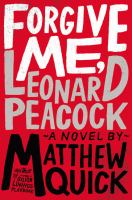
Forgive Me, Leonard Peacock by Matthew Quick

Forgive Me, Leonard Peacock

Although I read this book back in January, I never remembered to post a review.  Maybe it’s because I typically read more books per month than I review and some titles just slip through the cracks… but I prefer to think my subconscious was just saving this review for Banned Books Week!

I think this book is a likely target for would-be censors for a couple of reasons.  Not only are there the typical objectionable language and sexual situations that many people cite when challenging a book, but there is also the fact that the entire story revolves around Leonard Peacock’s plans to carry out a murder-suicide.  I understand that some people worry about teens being impressionable and mimicking the behavior of a character in a book, but I take umbrage with that reasoning.  After all, studies have shown that fiction can actually teach kids empathy.

While I agree, in theory, that it would be nice to be able to shield children from all of the terrible things that exist in our world, I recognize that it’s impossible.  Instead, I feel that it’s important to be open and honest so that my kids and the kids/teens I work with at my library feel comfortable enough to come to me if and when they find themselves in a troubling situation.  Rather than keeping this book out of the hands of teens for fear that a troubled teen who reads this book will decide to plan his/her own murder-suicide, I believe it is extremely important to make this book available.  Why?  Because I believe in the power of biliotherapy and think it is much more likely that teens who are struggling will learn from Leonard’s various mistakes, including his mistaken belief that he should end his life rather than seeking help.  Readers who enjoyed 13 Reasons Why should definitely check this one out.

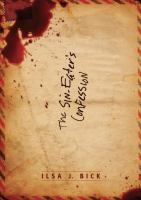
The Sin-Eater’s Confession by Ilsa J. Bick

The Sin-Eater's Confession

After Del died in a car accident, Ben started helping out on Del’s family’s farm.  While working on the farm, Ben started to look out for and became friends with Del’s younger brother, Jimmy, in a capacity much like an older brother.  After Jimmy was murdered, Ben felt guilty and escaped his home town by enlisting in the armed forces and heading to Afghanistan.  This story is told from Ben’s perspective, in a diary-style letter to someone back home, as he reflects back over the series of events that lead to Jimmy’s death and explains why he feels responsible.  The graphic description of Jimmy’s violent death definitely makes this a book for more mature readers, and I am sure some people would ultimately like to see this book banned.  I think, nevertheless, that this suspense-filled story is a great way to draw in readers who might not otherwise think they’d enjoy a story that explores such heavy themes as homophobia and hate crimes.  A definite departure from the apocalyptic world of Ashes, but equally well written.

Happy Banned Books Week!

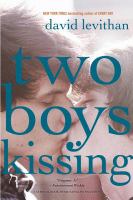
Two Boys Kissing by David Levithan

Two Boys Kissing

It wouldn’t be Banned Books Week without a review of a GLBT book, since so many would-be censors take umbrage with the fact that GLBT novels even exist.  So, I am taking this opportunity to finally review a book one of my teens suggested I read during GLBT Pride Month.  The basic premise of this story was that two [gay] boys were attempting to break the Guinness World Record for the longest kiss.  The strangest thing, though, was that they were not boyfriends.  They were, in fact, ex-boyfriends.  But, Harry and Craig were not kissing merely for the fun of kissing or even just to break the existing world record.  In fact, kissing for 32 hours was a rather grueling experience, both physically and emotionally.  But their 32-hour-long kiss was worth all of the difficulties it presented because it was a statement of support for their mutual friend, Tariq, who was the victim of a hate crime.  Although the “Greek chorus” of narrators — men who had died of AIDS — seemed a bit clunky at times, I think that narration ultimately worked as a means by which to educate younger readers about (late 20th century) GLBT history, the progress the GLBT community has made thus far, and how far we still have to go.  I really enjoyed this story, though I have to admit to shedding a tear or two.  I highly recommend this for fans of other David Levithan books (like Will Grayson, Will Grayson and Every Day) and suspect that it will likely end up on many YA literature syllabi as required GLBT reading.

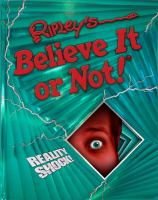
Ripley’s Believe It or Not! Reality Shock!

Ripley's Believe It or Not

I find it rather amusing that my 9-year-old son can’t handle seeing tiny hairballs on the floor from his beloved pet cat, but that he was completely enthralled by the FOUR POUND tiger hairball (picture on pg. 9) that was the size of a basketball! Looking through these books with my son, I always alternate between fascination and disgust.  And even though my own disgust sometimes outweighs my fascination, there’s something magical about bringing home a book that makes your child jump up and down with excitement and beg for just a few more pages before he has to go to bed.

Some of the most fascinating items in this issue were:

  • the skateboarding mice who can even jump through a ring of fire (pp. 14-15)
  • a woman named Barbie Thomas who, despite losing both of her arms at 2 years of age, has gone on to compete in fitness contests (pg. 97)
  • the man who took a picture of himself every single day for 12 years — a total of 4,514 photos! (pg. 152)
  • the Canadian base jumper who, after becoming paralyzed in a 2004 BASE-jumping accident, now jumps in his wheelchair (pg. 175)
  • the pumpkin artists (pp. 208-209) who are capable of turning pumpkins into sculptures of ghouls, goblins, and monsters

And some of the more disgusting items were:

  • the bedside table made from an actual, stuffed sheep (pg. 29)
  • the Sufi holy man who used a sharp stick to practically gouge out his own eye during the Urs religious festival in Ajmer, India (pg. 41)
  • the short-horned lizards that squirt blood from their eyes as a defense mechanism to scare off predators (pg. 90)
  • the “snot shots” (pg. 201) from artist Ulf Lundin’s Bless You project, in which people sneezed at a camera without covering their mouth/nose… ack!

If you’re looking for a conversation-starting/engrossing book to share with a tween, the Ripley’s books are a pretty sure bet.

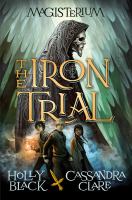
The Iron Trial: Book One of The Magisterium by Holly Black and Cassandra Clare

The Iron Trial

My son and I both love fantasy fiction, and we’re both suckers for ARCs from beloved authors… So, when I heard that Holly Black and Cassandra Clare were writing a middle-grade fantasy series together, I just knew I had to get my hands on a copy of this ARC.  (The good news for anyone reading this review is that the book came out September 9th and you can read it without scheming to find an ARC!)

And do you know what was even better than opening a random, unexpected package to find a copy of this ARC?  When it arrived in the mail on the very day that we were ready to start a new book.  Awesomesauce!  I knew these authors were awesome and that a collaboration between them was likely to be epic, but I also kind of expected that this book would be somewhat formulaic and predictable, like many of the other middle-grade fantasies I’ve read.  Thankfully, I was wrong.  Although there were some parallels to other books we’ve read, the story was fresh and there were a couple of plot twists that blew our minds!

Callum’s father has always taught him that magic is bad and that the Magisterium, a school that teaches adolescents how to hone their magical abilities, is evil.  So, when Callum had to go in to test his magical acuity at the Magisterium, he did his best to fail.  For some reason, nevertheless, Master Rufus chose Callum to be one of his apprentices.  Even though neither he nor his father wanted him to attend, being selected meant that Callum had to go to the Magisterium… As soon as he started to learn how to use his magic and began to make friends, though, Callum started to wonder if maybe his dad was wrong after all…

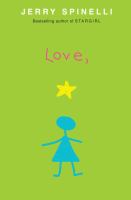
Love, Stargirl by Jerry Spinelli

Love, Stargirl

Thanks to this audiobook, I now know that September 8th is the anniversary of the day that Stargirl (aka Susan Caraway) first laid eyes on Leo Borlock.  As she strolled through the Mica High cafeteria with her ukelele and sang Happy Birthday to some other unsuspecting stranger, she saw the fear in Leo’s eyes as he worried that she might come and sing to him.  Of all the stuff that happened in this story, Stargirl’s remembrance of that day was a pretty small thing, but it really stuck with me.  Why?  Because *MY* birthday is September 8th!  Though I seriously doubt Jerry Spinelli wrote that into his book for me, I wonder if he’s friends with Jon Scieszka and used that reference as a shout out to him.  (Yeah. I share a birthday with Jon Scieszka — and Jo Knowles — how awesome is that?!?)

Anyhow… I like the fact that this book was written as a letter from Stargirl to Leo in diary form.  It was cool to see things from her perspective this time.  I mean, it was easy enough to see from Leo’s narration (in Stargirl) that she was a free spirit, but it was cool to see exactly how her thought process worked.  I am most definitely a “Type A” personality, so it took a lot for me to get into her head and to understand where she was coming from, but it made a little more sense as she explained herself.  Living without clocks, for example, seems kinda cool — but I think I would go batty after only a day or two.

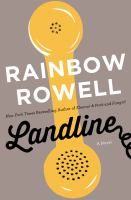
Landline by Rainbow Rowell

Landline

This book is kind of hard to categorize by my usual standards.  First of all, it’s technically a book for adults, which I don’t usually read.  BUT, Rainbow Rowell is a popular YA author and I think some older teens might check this one out after finishing Fangirl or Eleanor and Park.  I mean, if she got *me* to read a book for grown ups, anything is possible! 😉  But, I digress… The main reason this book is hard to categorize is because it’s mostly realistic/contemporary fiction, but there’s a small science fiction/fantasy element wherein Georgie (the main character) is able to use the landline at her mother’s house to call her husband, Neal, back when he was still in college and hadn’t yet proposed.

I think this book resonated so much with me because I have been having a crazy time trying to find a good work/family balance in my life and Georgie’s life is my worst nightmare.  She’s in over her head with work, her kids don’t really seem to miss her when she’s not around, her husband is resentful that she often puts work first, and she isn’t even sure if it’s possible to turn things around enough to save her marriage.  As I read this book, I kept thinking about my own recent choices in which I put work first and wondered whether I had started straining my own marriage.  I must have asked my husband at least 15 times over the course of 4 days whether he was OK with how things are going, so I’m pretty sure he’s happy that I am done with this book and will stop projecting Georgie’s problems into my life!  I think my inability to separate the story from real life, nevertheless, is simply proof that Rainbow Rowell is a great author who knows how to write relatable and believable characters.  If I had had the energy to stay up all night reading, I definitely would have finished this book in one big gulp.

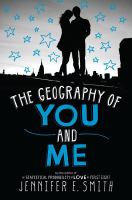
The Geography of You and Me by Jennifer E. Smith

The Geography of You and Me

With her parents off traveling all the time and her brothers away at school, Lucy has learned to enjoy being alone much of the time.  Since she doesn’t really have a lot of friends, let alone a boyfriend, and rarely leaves her apartment except for school, her parent’s aren’t even worried to leave her alone in the apartment as they travel the world. They figure, apparently, that she can’t get into too much trouble on her own.  Lucy’s whole world gets flipped upside down, though, the day she gets stuck in an elevator with Owen during a massive blackout.  Lucy had been heading up to her family’s 24th floor apartment, and Owen was heading up to the roof to escape his basement apartment (he lives there because his father recently became the building superintendent).  After getting rescued, the two wander the dark streets of NYC and enjoy the fantastic world in which ice cream vendors give away their melting wares and stars are actually visible above the city that never sleeps.  When the power comes back on, nevertheless, they are jarred back into their very different realities.  Lucy is soon whisked away to live with her family in Europe, because her dad got a major promotion, and Owen ends up heading west with his father, after he finds himself jobless again.  Based on a conversation they had about cheesy postcards (during the blackout), they end up staying in touch via postcards instead of with the standard text messages and emails most teens now use.  Fans of Sarah Dessen-style romances should definitely read this book.

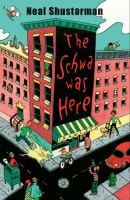
The Schwa Was Here by Neal Shusterman

The Schwa Was Here

Anthony “Antsy” Bonano was one of the few people in the world who ever noticed Calvin Schwa (aka The Schwa).  As Antsy said, The Schwa was “functionally invisible,” and it seemed that he was right.  Kids would walk right past him without seeing him, even if he wore ridiculous clothing.  Teachers would look past his raised hand or even mark him absent despite his presence/attempted participation in class.  And his own father would often not realize he was home.  Antsy first tested his hypothesis — with the aforementioned ridiculous clothing — and then he did his best to capitalize on The Schwa Effect.  He figured people would pay good money for someone who was able to spy without getting caught or who was capable of slipping a late assignment into a teacher’s bag unnoticed, and he was right.  The only thing he didn’t really think about was the fact that The Schwa was a person with emotions like everyone else.  Sure, it was cool that he could sometimes get away with things other kids couldn’t… but being invisible can get pretty lonely, too.

Fans of the Unwind Dystology might have a hard time believing that this book was written by the same author, but they won’t likely be disappointed — as long as they can appreciate a wry/sarcastic sense of humor, that is . Here’s a little taste of Antsy for people who are on the fence:

“Life is like a bad haircut. At first it looks awful, then you kind of get used to it, and before you know it, it it grows out and you gotta get another haircut that maybe won’t be so bad, unless of course you keep going to SuperClips, where the hairstylists are so terrible they oughta be using safety scissors, and when they’re done you look like your head got caught in a ceiling fan.  So life goes on, good haircut, bad haircut, until finally you go bald, and it don’t matter no more.
I told this wisdom to my mother, and she said I oughta put it in a book, then burn it.  Some people just can’t appreciate the profound.”

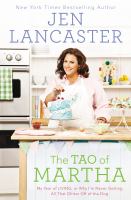
The Tao of Martha : My Year of LIVING, or Why I’m Never Getting All That Glitter Off of the Dog by Jen Lancaster

The Tao of Martha

Anyone who follows my posts on this blog will notice that I don’t usually read a lot of “books for grown ups.”  One of the reasons I became a Tween & Teen Librarian is because working with teens is good cover for the fact that I still read (and sometimes act) like a teen!  😉   So, when one of my friends suggested I read this book, I told her she was crazy.  She assured me that it was something I would love and that I should just go for it.  Boy, am I glad I listened!  I felt right at home with Jen Lancaster’s sarcastic sass.  I think she could be my new BFF if we ever met in person…  And I also think this book may very well be the literary/memoir equivalent of a Melissa McCarthy movie!  People sometimes tease me that I am “going all Martha” when I prepare themed birthday parties for my kids, host elaborate holiday dinners, and make homemade gifts for teachers, friends, and family.  While I quickly acknowledge that my work is not as perfect as Martha’s, I enjoy the process and the satisfaction of a job well — or well-enough! — done.  And though I’ve had my fair share of crafting and cooking fails through the years, I’m not sure I could ever write a book that tied them all together so well and with so much humor.  I would definitely recommend this book to anyone who wants a laugh out loud reminder that we’re not all “Marthas,” and that’s OK!

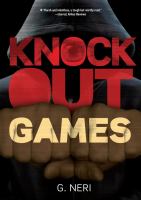
Knockout Games by G. Neri

Knockout Games

After reading and enjoying Surf Mules and Ghetto Cowboy, I was looking forward to seeing how Neri would handle this topic . Once I downloaded the ARC and started reading it, though, I second-guessed my decision.  Some of the depictions of violence literally made me sick to my stomach.  When I got to the very first knockout, I had to put the book (well, Kindle) down and just read something else because I was so utterly disturbed.  I was talking to a friend about it and saying that I didn’t know if I could handle reading this story, but he reminded me that this is an important story to have available to teens and that pushing myself beyond my comfort zone to finish this story would make me better able to recommend it to those who needed it.  After all, this isn’t a fantasy or science fiction story with gratuitous violence; this is a contemporary, realistic story about an actual problem in urban neighborhoods.  Real teens are “playing” the knockout game, and Neri’s story can help people — whether players or outsiders — better understand the factors that lead people to play and the faulty logic many players use to justify their participation.  People who don’t actually read the story might fear that Neri glorifies the game, but anyone who reads the whole book will understand that, though he humanizes the players and explains the motivations they might have in playing this deadly game, he makes it clear that their cop-outs and excuses do NOT justify their destructive actions.  So glad I made myself go back and finish this one.  Hopefully, the timely publication of this book will succeed in educating and deterring would-be players.

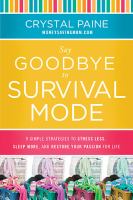
Say Goodbye to Survival Mode: 9 Simple Strategies to Stress Less, Sleep More, and Restore Your Passion For Life by Crystal Paine

Say Goodbye to Survival Mode

Earlier this summer, a patron came in looking for this book because one of her friends swore it was a life changer.  I was in over my head with both personal and professional commitments, sleeping poorly, and desperate for anything that could help me change my “barely keeping my head above water” style of living.  As soon as I placed a request for the patron, I added another for myself.  The very day that I started reading this book, I read the first couple of chapters and started making lists of my priorities, goals, and routines so I could set up a concrete plan for moving forward.  I am sure I probably could have worked through things on my own, but it was so much easier to have a step-by-step plan that was created by an author who had “been there, done that.”  Although I would like to say my life turned completely around in the week it took me to finish this book, I have to be more honest and say that I’m simply on my way.  I’m working on saying no to things that don’t help me reach my goals rather than over-committing myself; I’m working on finely tuning my morning and evening routines to get all of my “must do” stuff done (while letting go of the stuff that doesn’t truly matter); and I’m trying to live by the OHIO (Only Handle It Once) rule I once learned at a workshop about organizing — don’t put it in a pile or on a list if you can just get it done right now.  So far, so good.  Wish me luck!